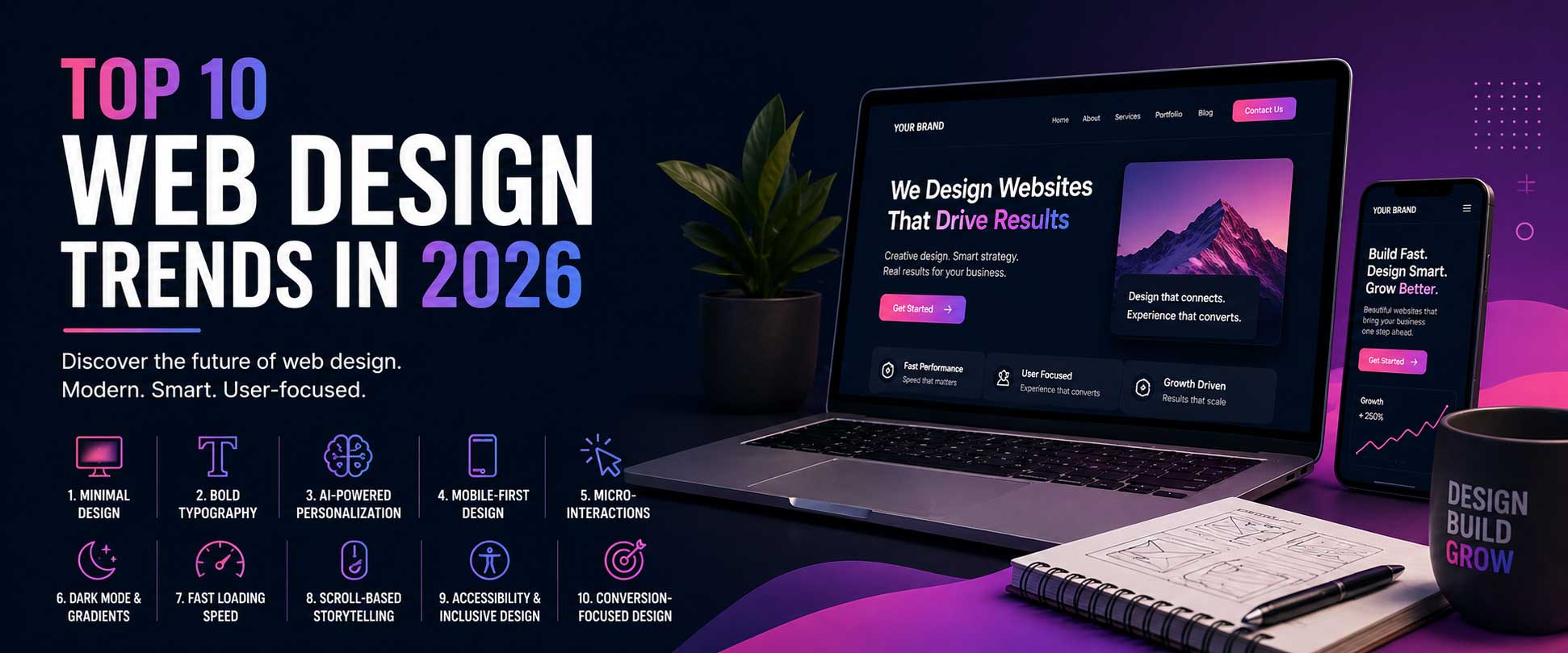
Web design trends in 2026 are evolving rapidly, driven by technology, user behavior, and the growing demand for better digital experiences. Businesses can no longer rely on outdated designs if they want to stay competitive online. A modern website must be visually appealing, fast, user-friendly, and optimized for conversions.
In this guide, we’ll explore the top 10 web design trends in 2026 that are shaping the future of websites and helping businesses attract, engage, and convert more visitors.
1. Minimal and Clean Web Design
Minimalism continues to dominate modern web design. Clean layouts, simple color schemes, and generous white space help users focus on key content without distractions.
A minimalist website:
- Improves readability
- Enhances user experience
- Looks more professional
This trend is especially important for businesses that want to build trust and clarity.
2. Bold Typography and Visual Hierarchy
Typography is becoming a major design element. Large, bold fonts are now used to immediately capture attention and communicate brand identity.
Using strong typography helps:
- Highlight key messages
- Improve content scanning
- Create a memorable visual experience
In 2026, websites that use typography strategically will stand out more than ever.
3. AI-Powered Personalization
Artificial Intelligence is transforming how websites interact with users. Modern websites can now display personalized content based on user behavior, location, and preferences.
Examples include:
- Personalized product recommendations
- Dynamic homepage content
- Smart chatbots
This trend significantly increases engagement and conversion rates.
4. Mobile-First and Responsive Design
With the majority of users browsing on mobile devices, mobile-first design is no longer optional—it’s essential.
A mobile-first website ensures:
- Fast loading on smartphones
- Smooth navigation
- Better Google rankings
Responsive design allows your website to adapt perfectly across all screen sizes, improving both UX and SEO performance.
5. Micro-Interactions and Animations
Micro-interactions are small animations that respond to user actions, such as hover effects, button clicks, and loading indicators.
These subtle details:
- Make websites feel interactive
- Improve user engagement
- Guide users through the interface
When used correctly, they enhance usability without slowing down performance.
6. Dark Mode and Modern Color Gradients
Dark mode continues to grow in popularity due to its sleek appearance and reduced eye strain. Alongside this, soft gradients and modern color palettes are being used to create visually appealing designs.
Benefits include:
- Better visual comfort
- Premium look and feel
- Strong brand identity
7. Website Speed and Performance Optimization
Speed is one of the most important ranking factors in SEO. Users expect websites to load within seconds, and delays can lead to higher bounce rates.
To improve performance:
- Optimize images
- Use fast hosting
- Minimize code
A fast website improves both user experience and search engine rankings.
8. Scroll-Based Storytelling
Storytelling through scrolling is becoming a powerful design trend. As users scroll, content appears with smooth transitions, animations, and structured flow.
This approach:
- Keeps users engaged longer
- Improves content consumption
- Creates a memorable experience
It’s widely used in modern landing pages and portfolio websites.
9. Accessibility and Inclusive Design
Web accessibility is now a standard requirement. Websites must be usable for people with disabilities, including those with visual, auditory, or motor impairments.
Key practices include:
- Proper contrast ratios
- Readable fonts
- Keyboard navigation
Accessible websites reach a wider audience and improve overall usability.
10. Conversion-Focused Web Design
In 2026, websites are not just about design—they are about results. Conversion-focused design ensures that every element on the page encourages users to take action.
This includes:
- Clear call-to-action buttons
- Trust signals (reviews, testimonials)
- Simple user journeys
A well-designed website should guide users naturally toward becoming customers.
Why These Web Design Trends Matter
Following the latest web design trends is not just about staying modern—it directly impacts your business growth. A well-designed website can:
- Increase user engagement
- Improve SEO rankings
- Generate more leads and sales
👉 If you want a modern, high-performing website that follows these trends and drives real results, you can explore professional solutions here:
https://rexostudio.com/
Conclusion
Web design trends in 2026 focus on combining creativity, technology, and performance. From AI personalization to conversion-focused layouts, these trends are shaping the future of digital experiences.
By implementing these strategies, businesses can create websites that not only look impressive but also deliver measurable results. Staying updated with these trends ensures you remain competitive in an ever-changing online landscape.